

Commercial Roofing
Extreme Weather and Flat Roofs: Why Owners Are Looking at Polyurea
Severe storms, hail and heat are hard on flat roofs. Learn what spray polyurea roofing is, how it compares with silicone, acrylic…
Read article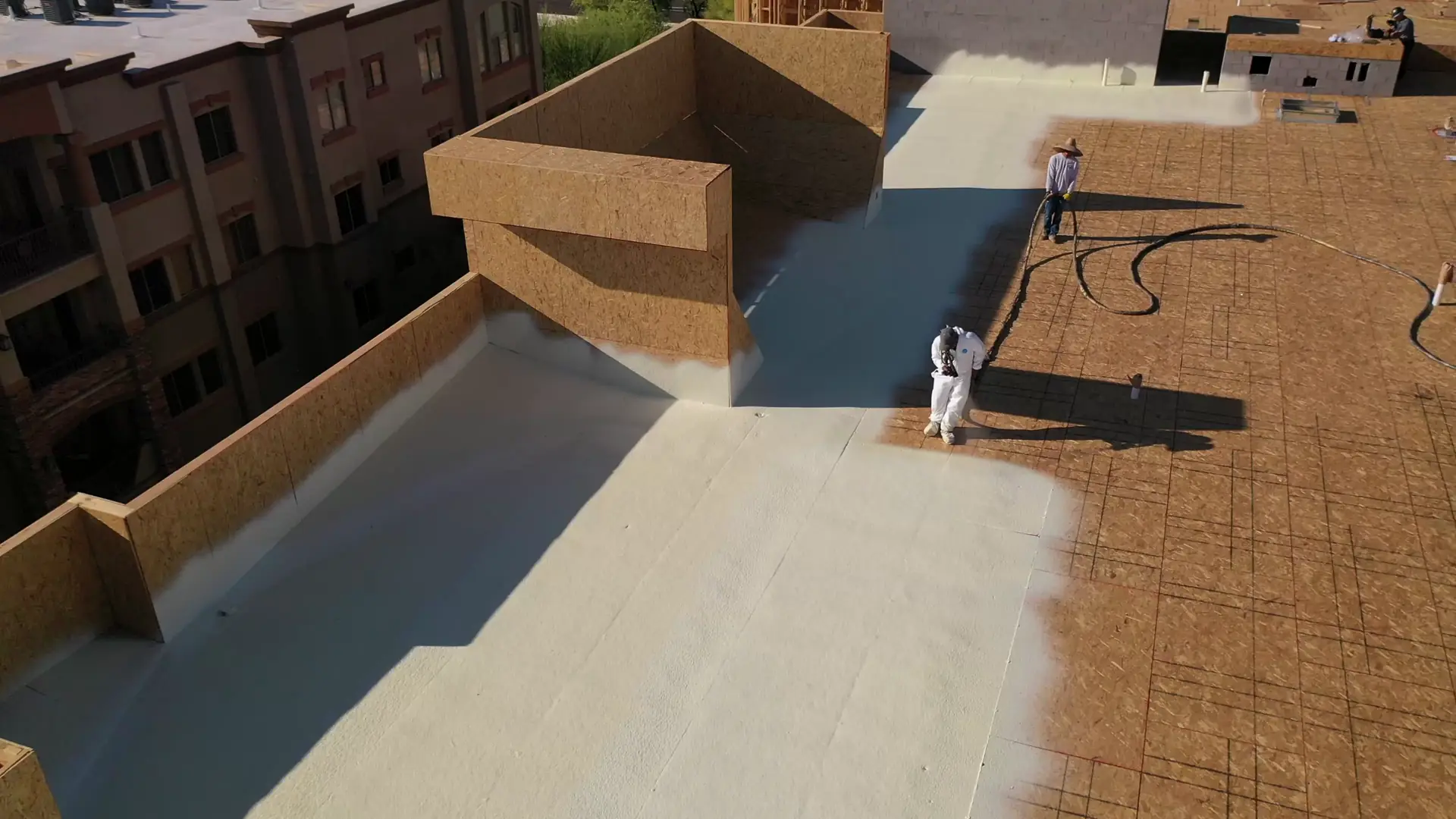
Polyurea roof coating & waterproofing
One continuous, fully adhered membrane for commercial, metal, foam, deck and RV roofs. Applied by trained crews using ArmorThane polyurea systems.
Aerial footage: polyurea being sprayed on a commercial roof.
Polyurea is sprayed on as a liquid and sets within moments into a tough, flexible membrane. It wraps every drain, curb and fastener in one continuous layer, and it can often go over the roof you already have once it has been inspected and prepared.
Seamless
No laps, seams or fasteners on the finished surface.
Fast-setting
Sets within moments, so roofs go back in service sooner.
Fully adhered
Bonds to the prepared roof instead of floating over it.
Goes over many roofs
Metal, concrete, single-ply, built-up and foam, after inspection.
Services
Pick your roof. Each page explains what the work involves, what to expect and what to ask.

Seamless, fully adhered coating for low-slope commercial, industrial and flat roofs.
Learn more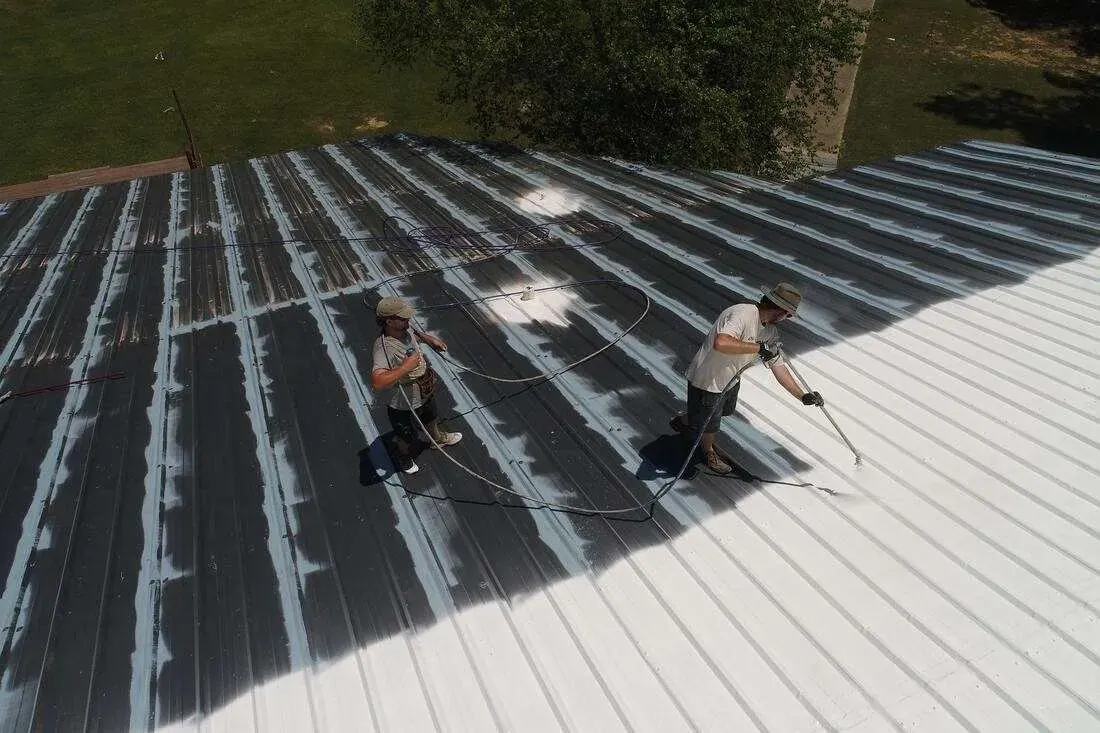
Stop leaks at seams, flashings and penetrations, then restore the whole roof in one membrane.
Learn more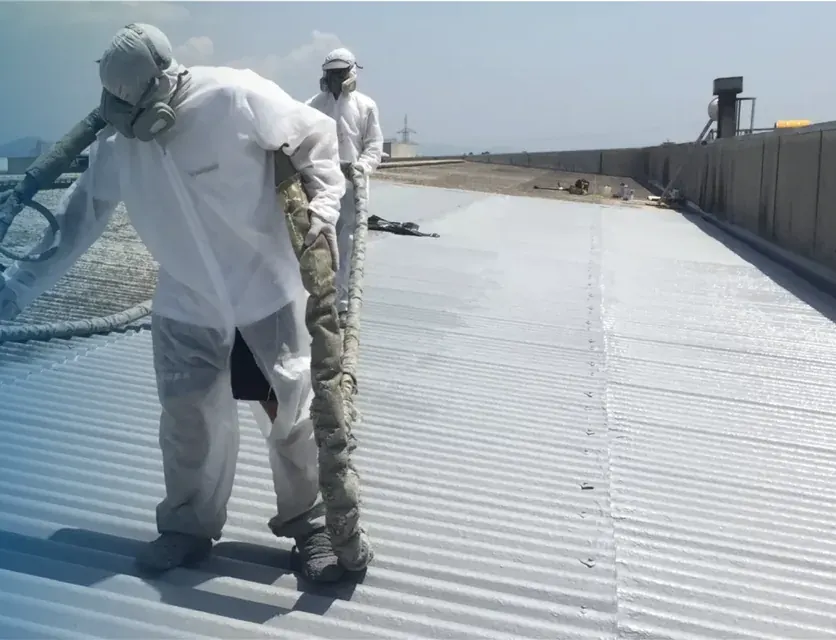
Seal fasteners, laps and rust on metal roofs with a flexible, fully bonded membrane.
Learn more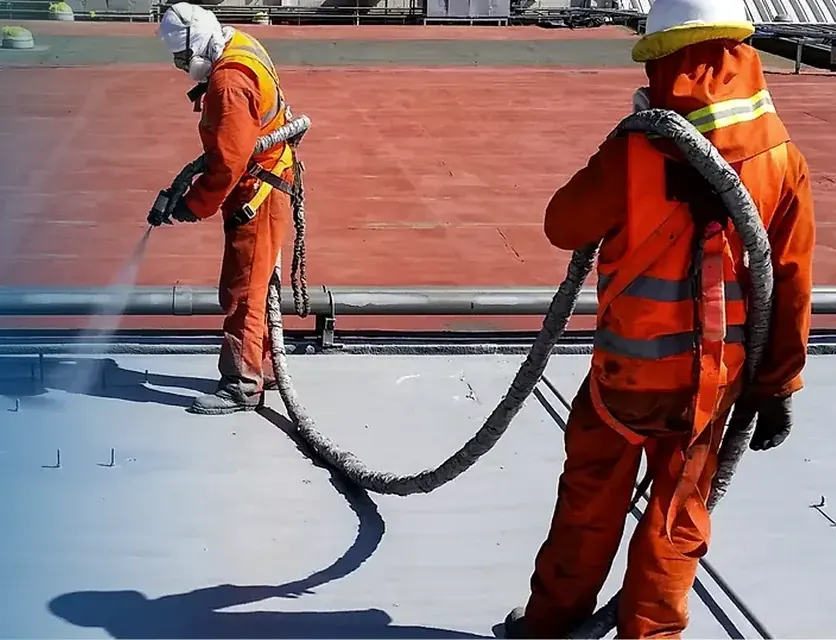
Protect spray foam roofing from sun, weather and traffic with a tough polyurea surface.
Learn more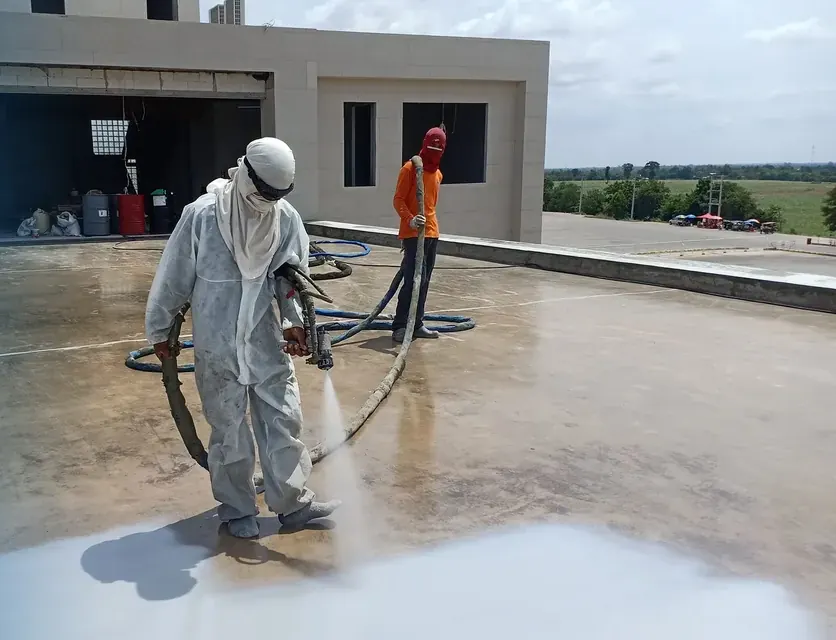
Waterproof roof decks, balconies, planters and podiums with a seamless sprayed membrane.
Learn more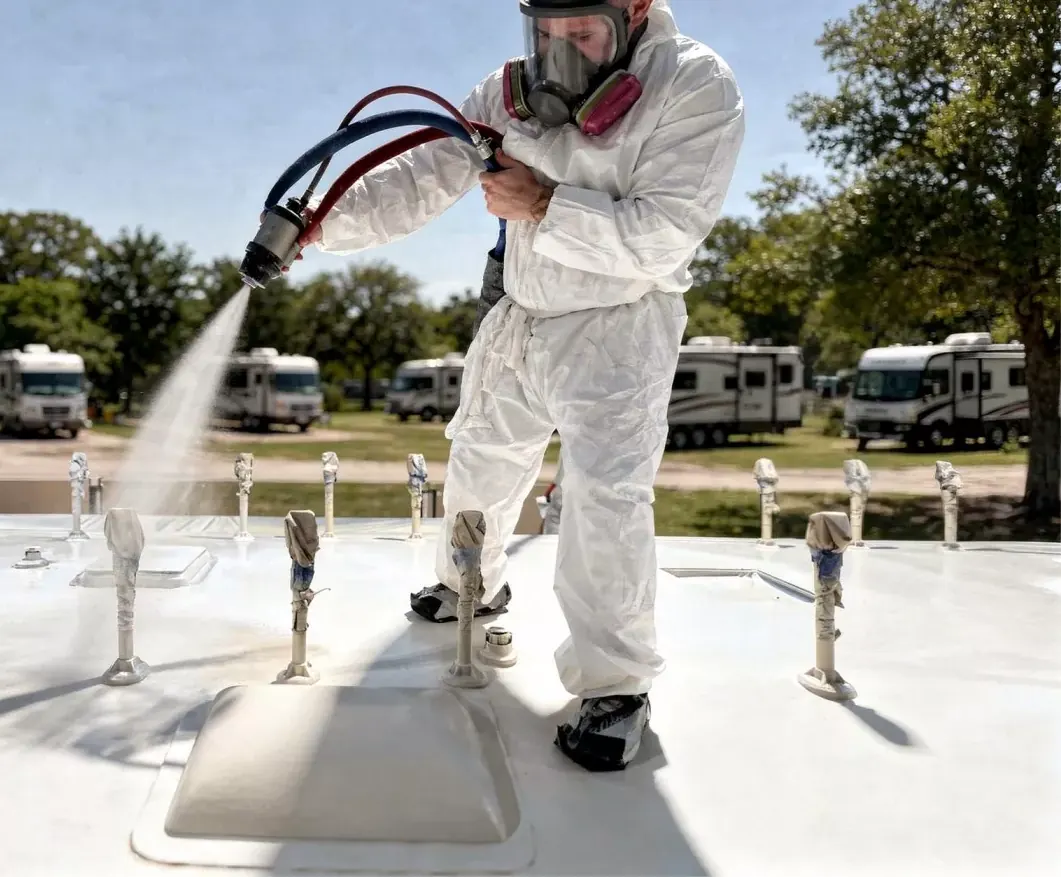
Replace failing rubber RV roofs with a seamless sprayed system that seals every vent and seam.
Learn moreBuilt for hard-working roofs
Polyurea is known for standing up to abrasion, impact and foot traffic, while staying flexible enough to move with a roof as it heats and cools.
Process
A trained applicator walks the roof, checks for trapped moisture, tests adhesion on the existing surface and looks at drainage, flashings and penetrations. You get a written scope for your roof.
Loose material comes off. Wet or failed areas are cut out and replaced. Fasteners, seams and cracks are repaired, the surface is cleaned, and the right primer goes down for the substrate.
Drains, curbs, vents and edges are detailed first. Then the polyurea is sprayed with heated plural-component equipment into one continuous, fully adhered membrane at the specified thickness.
Where the roof sees direct sun, a UV-stable topcoat goes on if the system calls for one. The crew checks film thickness, walks every detail and cleans up.
Clear drains, keep traffic off where it does not belong and book a periodic inspection. Small damage can be cleaned and re-sprayed in place instead of tearing anything off.
Why polyurea
Every roof system has a place. Here is where spray polyurea differs from the coatings and sheets most roofs use today.
| Feature | Spray polyurea | Silicone coating | Acrylic coating | Single-ply (TPO / EPDM) |
|---|---|---|---|---|
| Seams | None. One sprayed, fully adhered membrane. | None. Fluid-applied in coats. | None. Fluid-applied in coats. | Seams are welded or taped. |
| How it goes on | Heated plural-component spray rig. | Roller or airless sprayer, usually several coats. | Roller or airless sprayer, several coats. | Sheets fastened or adhered, usually after tear-off. |
| Set and cure | Sets within moments of application. | Cures over hours, with moisture in the air. | Needs dry, mild weather to cure. | No cure. Install time depends on tear-off. |
| Over an existing roof | Often, after inspection and adhesion testing. | Often, over sound roofs. | Often, over sound roofs. | Sometimes; many jobs need tear-off. |
General comparison only. Performance depends on the specific product, thickness and prep. Always review the technical data sheet for the system proposed for your roof.
Applications
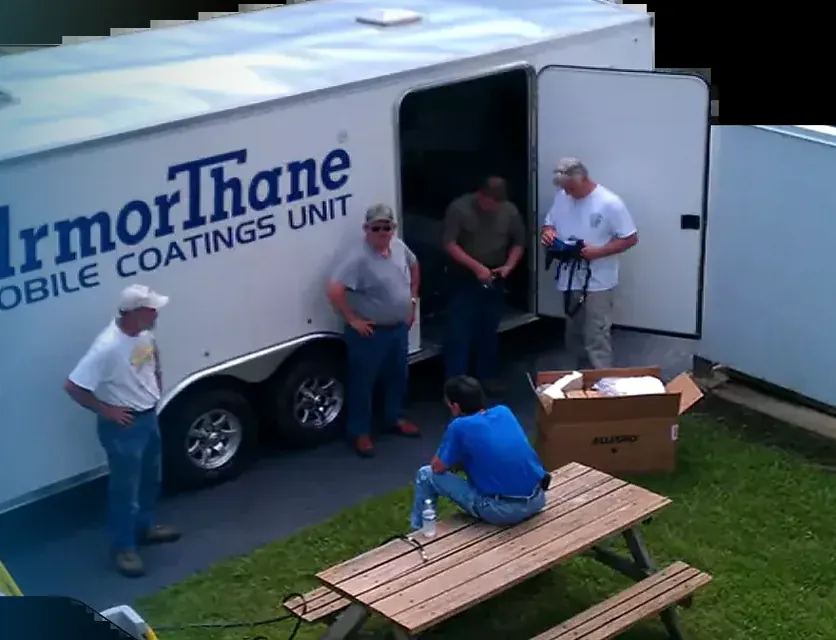
For contractors
ArmorThane manufactures the coatings, builds the spray equipment and trains your crew. You run your own business, with no franchise fees or royalties.
Become an applicatorResources
Commercial Roofing
Severe storms, hail and heat are hard on flat roofs. Learn what spray polyurea roofing is, how it compares with silicone, acrylic…
Read article
Commercial Roofing
Self-healing, smart and nanotech roof coatings are on the way. A plain look at where roof coating technology is heading and what…
Read article
Roofing
Acrylic, silicone, asphalt, polyurethane or polyurea? A plain guide to the main roof coating types and why polyurea is a strong choice…
Read articlePolyurea is a two-component elastomer. The two sides are heated and mixed at the spray gun, and the material sets within moments of hitting the roof. The result is one continuous, fully adhered membrane with no seams, laps or fasteners for water to find.
Often, yes. Polyurea can be sprayed over many metal, concrete, single-ply, built-up and spray foam roofs. It has to be the right roof, though. Wet insulation, failed decking and poor adhesion have to be found and fixed first, which is why every job starts with an inspection and adhesion testing.
It depends on the system, the film thickness, the condition of the roof underneath, the prep, your climate and how the roof is maintained. Ask your applicator for the technical data sheet of the product they plan to use and for the written terms they offer on your roof.
Every roof is quoted after an inspection. Size, condition, access, the amount of repair and prep, detail work and the system chosen all change the number. Request a quote and a trained applicator will scope your roof.
No. Polyurea is a protective membrane, not insulation. If you want insulation value on the roof, that comes from spray foam. Polyurea or a compatible coating then protects the foam from weather, traffic and sunlight.

Tell us about the roof. A trained applicator will follow up to inspect it and scope the work.