
Commercial & Flat Roofs
Commercial and flat roof coating, without a single seam.
Polyurea is sprayed directly over a prepared roof and sets in moments. You get one continuous membrane that bonds to the surface, with nothing to lap, glue or weld.
Overview
Commercial & Flat Roof Polyurea Coating
Flat and low-slope roofs fail where materials meet: at seams, laps, flashings and fasteners. Spray polyurea removes most of those weak points. It is applied as a liquid, sets almost immediately and builds a tough, flexible membrane that follows every curb, drain and penetration.
Because it can often go over the existing roof once wet and failed areas are fixed, many buildings avoid a full tear-off. That means less waste, less disruption to tenants and a roof that is back in service quickly.
Why polyurea
Why it works here.
No seams to fail
The membrane is continuous from edge to edge, including around penetrations.
Fast return to service
Polyurea sets within moments, so crews can work in sections and keep the building open.
Tough surface
Polyurea is known for resisting abrasion, impact and foot traffic better than most roll-on coatings.
Process
Most of the work happens before the spray gun comes out.
-
01
Inspect and assess
A trained applicator walks the roof, checks for trapped moisture, tests adhesion on the existing surface and looks at drainage, flashings and penetrations. You get a written scope for your roof.
-
02
Prepare the surface
Loose material comes off. Wet or failed areas are cut out and replaced. Fasteners, seams and cracks are repaired, the surface is cleaned, and the right primer goes down for the substrate.
-
03
Detail, then spray
Drains, curbs, vents and edges are detailed first. Then the polyurea is sprayed with heated plural-component equipment into one continuous, fully adhered membrane at the specified thickness.
-
04
Topcoat and check
Where the roof sees direct sun, a UV-stable topcoat goes on if the system calls for one. The crew checks film thickness, walks every detail and cleans up.
-
05
Keep it maintained
Clear drains, keep traffic off where it does not belong and book a periodic inspection. Small damage can be cleaned and re-sprayed in place instead of tearing anything off.
Do you have to tear off my old roof?
Not always. If the inspection shows the roof is mostly dry and the surface passes adhesion testing, the existing roof can usually stay. Wet or failed sections are removed and replaced first.
Can the building stay open during the work?
Usually. Crews work in sections, and overspray and access are managed around your operations. Your applicator will plan the schedule with you.
Will it handle ponding water?
Drainage should always be corrected where possible. Ask your applicator to confirm on the product data sheet how the chosen system performs under standing water.
Related
Other roofs we cover.
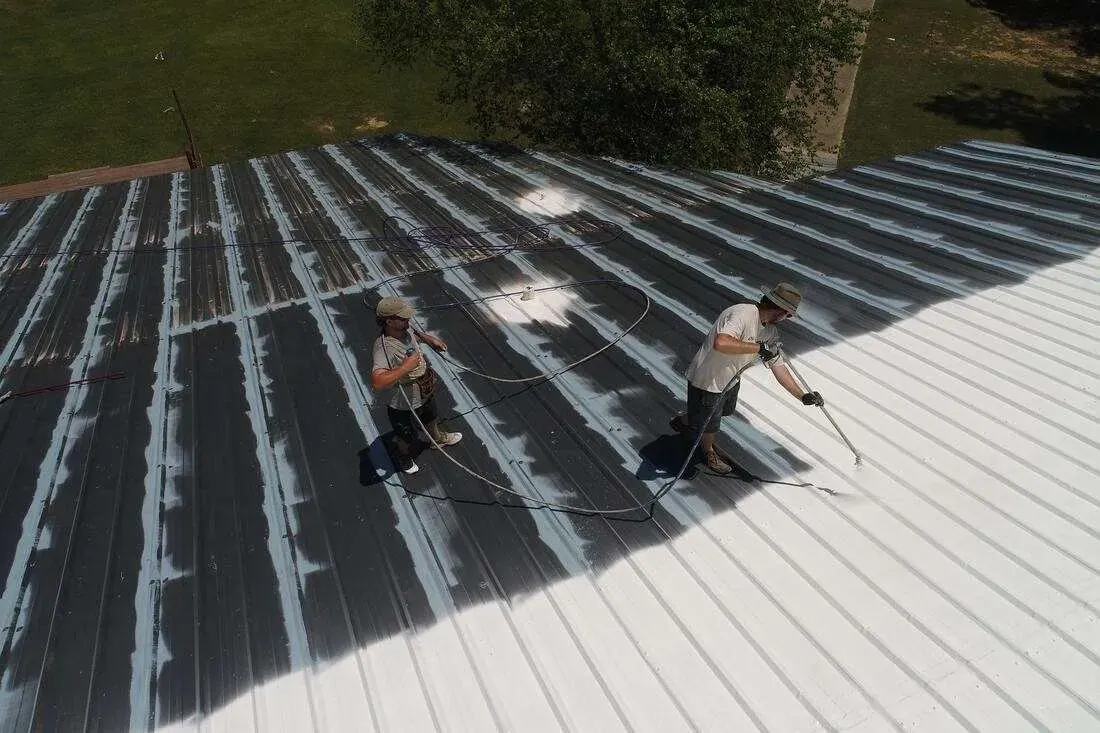
Roof Repair & Restoration
Stop leaks at seams, flashings and penetrations, then restore the whole roof in one membrane.
Learn more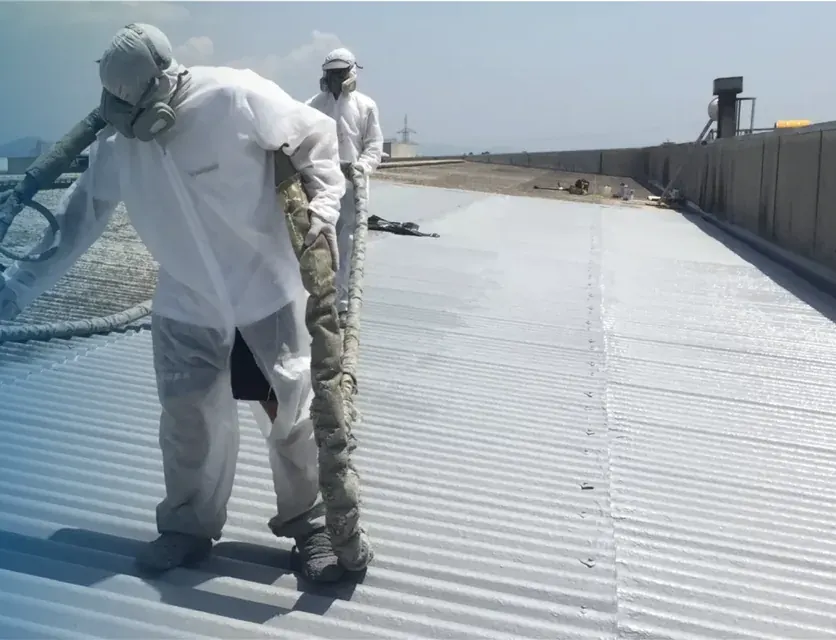
Metal Roofs
Seal fasteners, laps and rust on metal roofs with a flexible, fully bonded membrane.
Learn more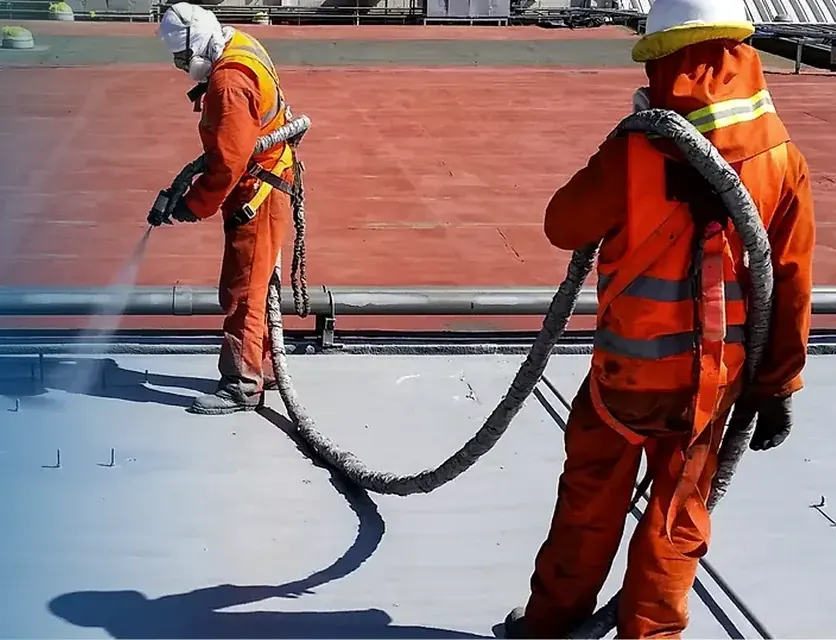
Spray Foam Roofs
Protect spray foam roofing from sun, weather and traffic with a tough polyurea surface.
Learn more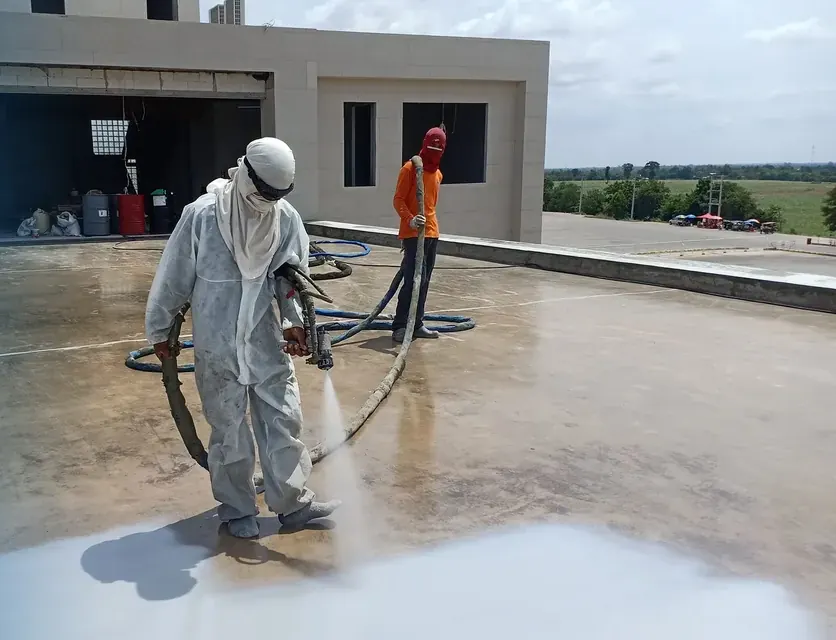
Decks & Waterproofing
Waterproof roof decks, balconies, planters and podiums with a seamless sprayed membrane.
Learn more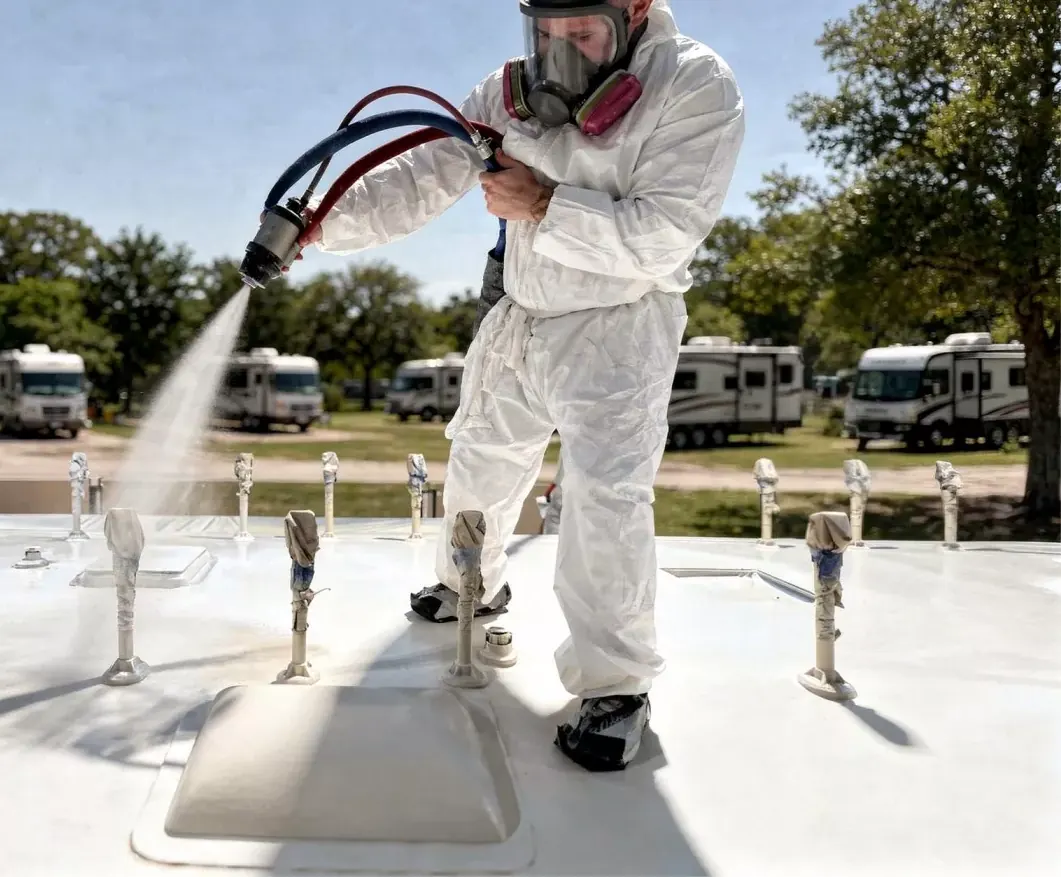
RV Roofs
Replace failing rubber RV roofs with a seamless sprayed system that seals every vent and seam.
Learn moreGet your roof looked at.
Tell us about the roof. A trained applicator will follow up to inspect it and scope the work.